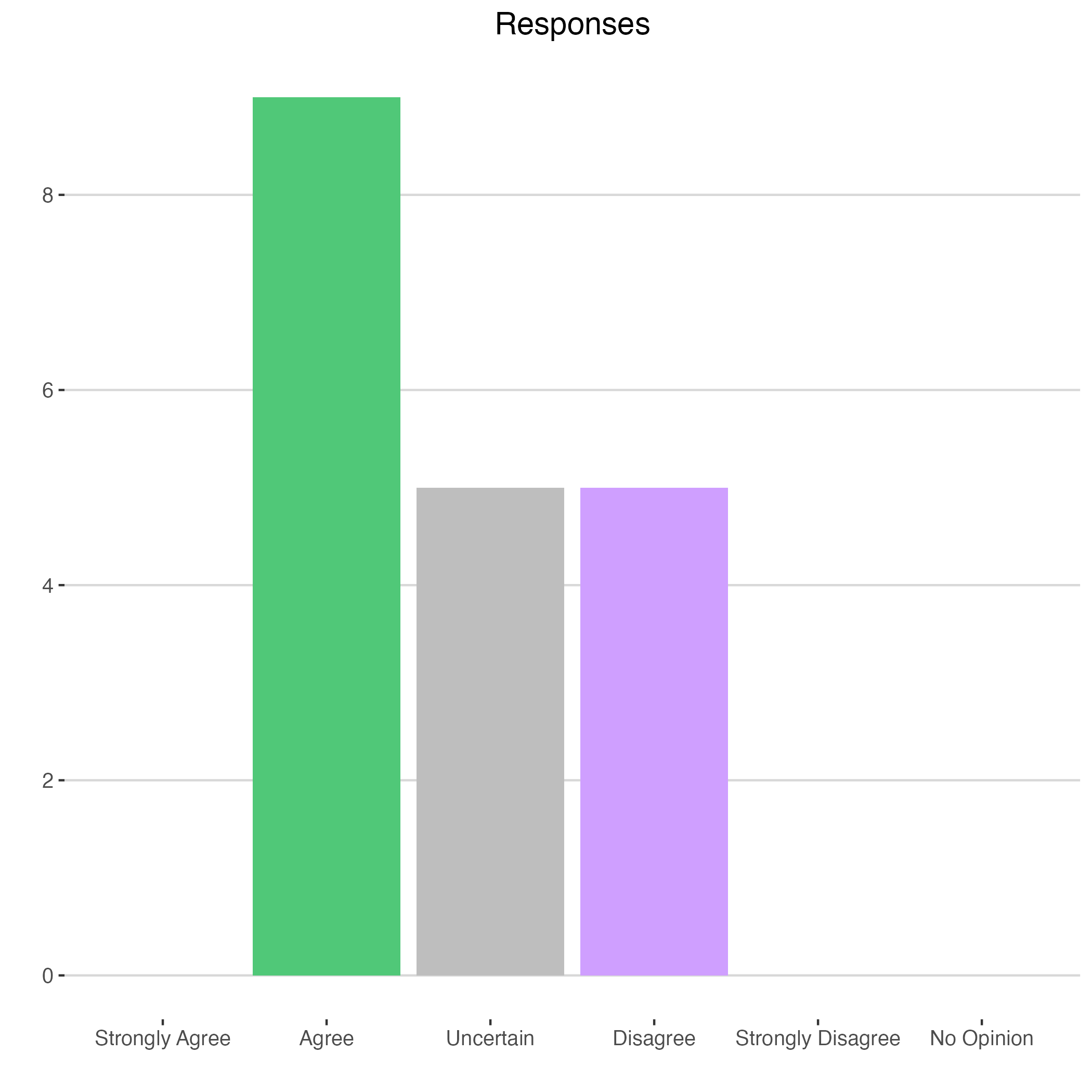
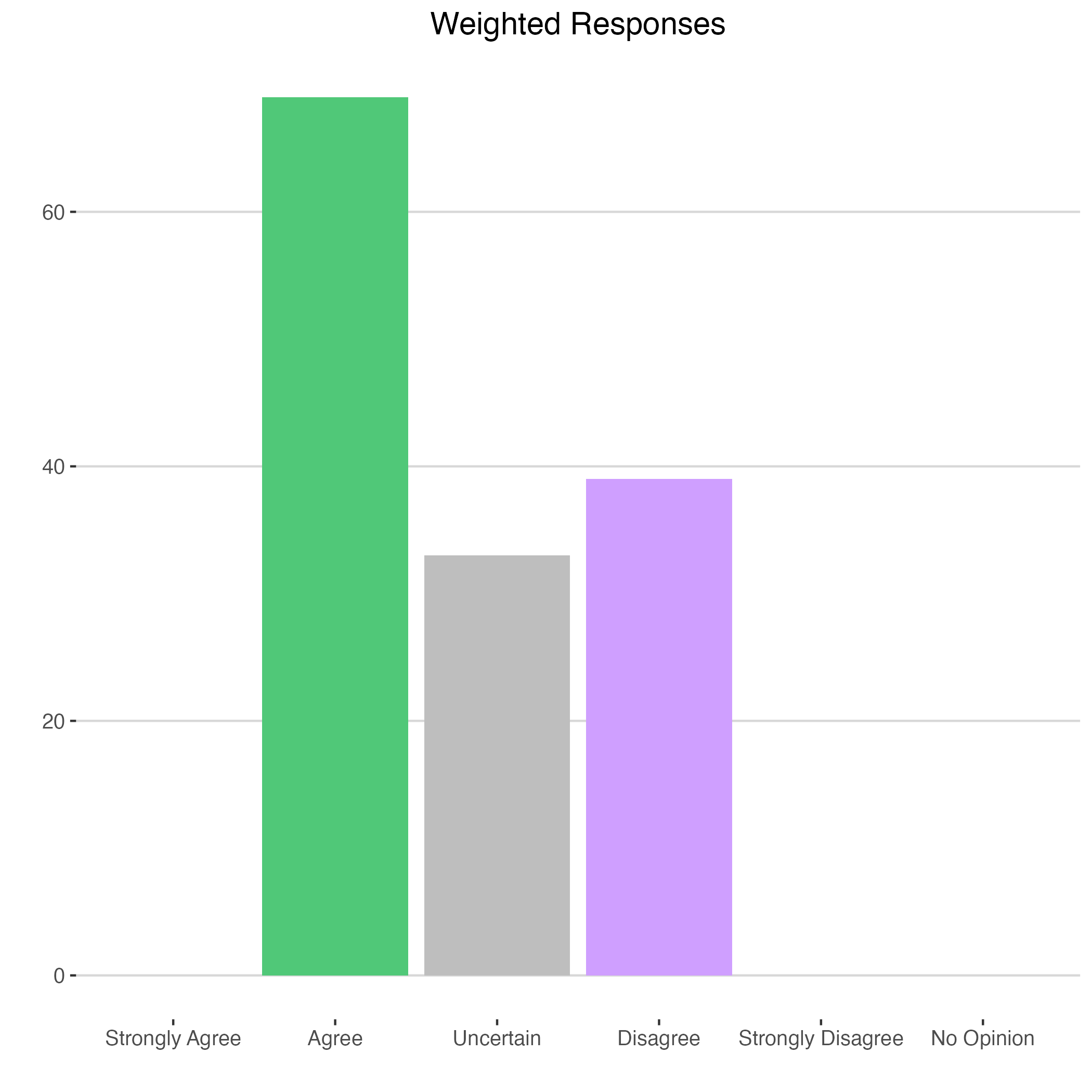
| Jonathan Andreas |
Bluffton University |
Agree |
8 |
Demand for gas is highly inelastic, and the supply FOR OHIO is relatively elastic in the short run since suppliers can transport gas across state lines fairly easily to go where it is most profitable, but this is a very short-run analysis and it will likely hurt the long-run prosperity of Ohio. |
| David Brasington |
University of Cincinnati |
Strongly Disagree |
9 |
The savings would only be about $50 per Ohio driver over the summer. |
| Ron Cheung |
Oberlin College |
Disagree |
7 |
|
| Kevin Egan |
University of Toledo |
Strongly Disagree |
10 |
Consumers would Not see a 38.5 cent reduction in gasoline prices; probably more like half that. Saving 16 cents a gallon for a vehicle that averages 30 mpg and is driven 16,000 miles a year so 4,000 miles in 3 months would save (4000/30)*.16=$21.33. $21 is not "meaningful". This is performance art by Ohio Congress instead of actually doing anything to help lower income households in the state with higher costs. |
| Kenneth Fah |
Ohio Dominican University |
Uncertain |
9 |
|
| Vinnie Gajjala |
Tiffin Univeristy |
Disagree |
9 |
|
| Bob Gitter |
Ohio Wesleyan University |
Disagree |
7 |
If you buy a tank of gas every week you would save $6. Over a three month period that would be about $80. Low-income people could use a break but $80 would not, in my view, by meaningful financial relief. |
| Nancy Haskell |
University of Dayton |
Uncertain |
8 |
|
| Paul Holmes |
Ashland University |
Disagree |
7 |
Meaningful' is open to interpretation, but my calculations suggest Ohio drivers use about 10 gallons of fuel per week, so this would save the average driver about $4 per week, about $50 over the three-month period. And because fuel usage increases with income, this 'tax relief' would be even smaller for lower-income Ohioans. The tax relief would, of course, be much greater for people who drive for a living, particularly trucking companies. |
| Faria Huq |
Lake Erie College |
Disagree |
7 |
|
| Christian Imboden |
Bowling Green State University |
Agree |
8 |
|
| Michael Jones |
University of Cincinnati |
Disagree |
6 |
Unless there is any corresponding reduction in spending on transportation infrastructure, a three-month suspension merely shifts the timing on when Ohioan consumers actually pay. For those Ohians who live in border cities like Cincinnati - they can experience the benefit of gas tax holidays in neighboring states while not experiencing the consequences of reduced investment. |
| Charles Kroncke |
Mount Saint Joseph University |
Strongly Agree |
10 |
|
| Bill LaFayette |
Regionomics |
Agree |
7 |
A suspension of the gas tax would amount to something like a 10.5% price cut - less if gas prices continue to rise. But that could be meaningful to lower-income households and those who have to drive far. |
| Trevon Logan |
Ohio State University |
Disagree |
8 |
|
| Joe Nowakowski |
Muskingum University |
Disagree |
9 |
|
| Curtis Reynolds |
Kent State University |
Disagree |
10 |
The key word is "meaningful." The current tax on gasoline is $0.385 per gallon. That is not nothing but gas prices of $2 more per gallon than they were a year ago. The gas tax is not the problem, nor is suspending it going to provide meaningful relief. |
| Ejindu Ume |
Miami University |
Agree |
9 |
|
| Rachel Wilson |
College Board |
Agree |
8 |
|