
In this post, I am going to explain the basics behind one of the most common market failures in economics, the natural monopoly. If you would like a more broad overview of what a market failure is, I have a previous blog post on that topic. Additionally, I won’t be going into any of the math behind this concept. Instead, this will be a more intuitive discussion of how natural monopolies work. If you would like a mathematical explanation of this topic, this is a great resource.

Regular Monopoly vs. Natural Monopoly
A natural first question when learning about natural monopolies is what makes them natural? There are two main factors that lead to this distinction.
First, with regular monopolies there is a single producer operating in a market because some factors outside the market have made it so no new suppliers can enter the market. The cost to enter the market for a new firm is too high, so only one remains. These barriers may come from outside the market, such as legal protections, control of resources, or anti-competitive behavior. A natural monopoly is also characterized by a high cost to enter the market that makes it so only one producer remains, but the difference is that in this case the high cost to enter is a factor of conditions within the market.
For example, a bad actor might create a regular monopoly by throwing bricks through the windows of their competitors. Now, any new firm that might want to enter the market knows that the cost to enter for them also includes daily window repairs, and they will choose to not bother. The end result is that only the bad actor remains and a monopoly forms.
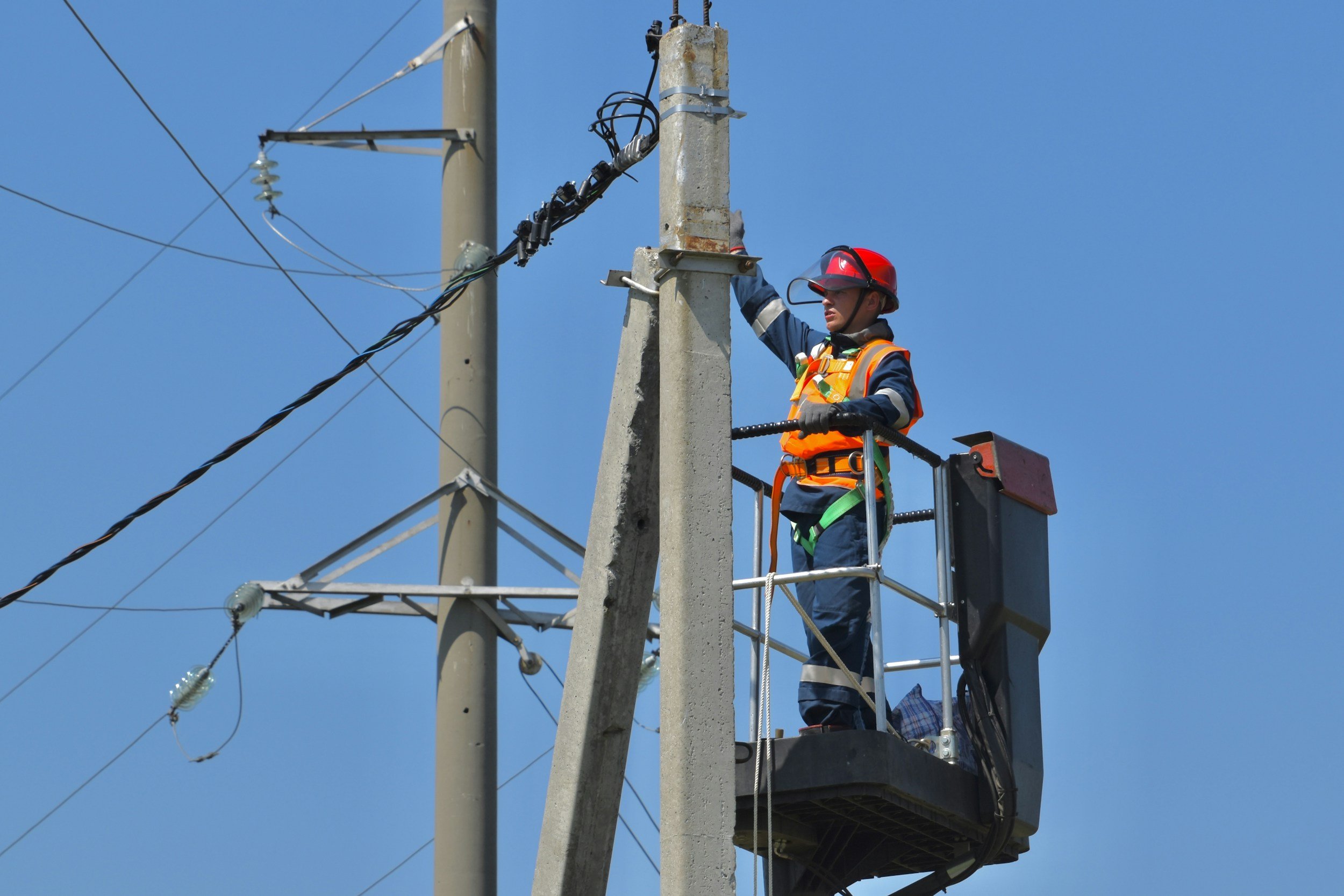
Now consider the market for electricity distribution. If you wanted to independently enter the market for electricity distribution, you would need to rebuild the entire electric grid including substations and transmission lines, and you would need to connect individual buildings to your own wires just to begin selling to people. The upfront costs are so high that competing against an established provider doesn’t make sense for prospective businesses.
The second main characteristic of a natural monopoly is that they have economies of scale. That means that after a firm manages to get established and pay the high upfront costs, it costs them very little to expand their operation and serve a wide range of customers. Consider again electricity distribution. Once a company builds power poles all across a city, it takes relatively very little to hook up one additional building.
The end result is that unlike regular monopolies, natural monopolies result organically from market conditions. The upfront costs and the economies of scale make it so that adding a new provider would actually be less efficient overall, since firms would have to charge extremely high prices in order to cover the high fixed costs.
Policy implications
If left to its own devices, a natural monopoly will create the same economic problems that regular monopolies do: higher than optimal prices and lower than optimal supply of the good. Unfortunately unlike regular monopolies it doesn’t just work for the government to force a natural monopoly to split up. Instead, policymakers allow natural monopolies to exist, but impose regulations on them that try to bring the market conditions more into balance with what we might hope for from a competitive market.
In practice, this usually means regulating the prices that natural monopolies can charge and the level of service they must provide. For example, many utilities are required to justify their prices to regulators, who review the company’s costs and allow prices that cover those costs plus a reasonable profit. This helps ensure that firms can maintain infrastructure and continue operating, while also protecting customers from excessive pricing.
Another approach policymakers sometimes consider is public ownership. In some communities, essential services like water or electricity distribution are operated by government-owned utilities rather than private firms. Both regulation and public ownership aim to solve the same core problem: how to capture the efficiency of a single provider without allowing monopoly power to harm consumers.