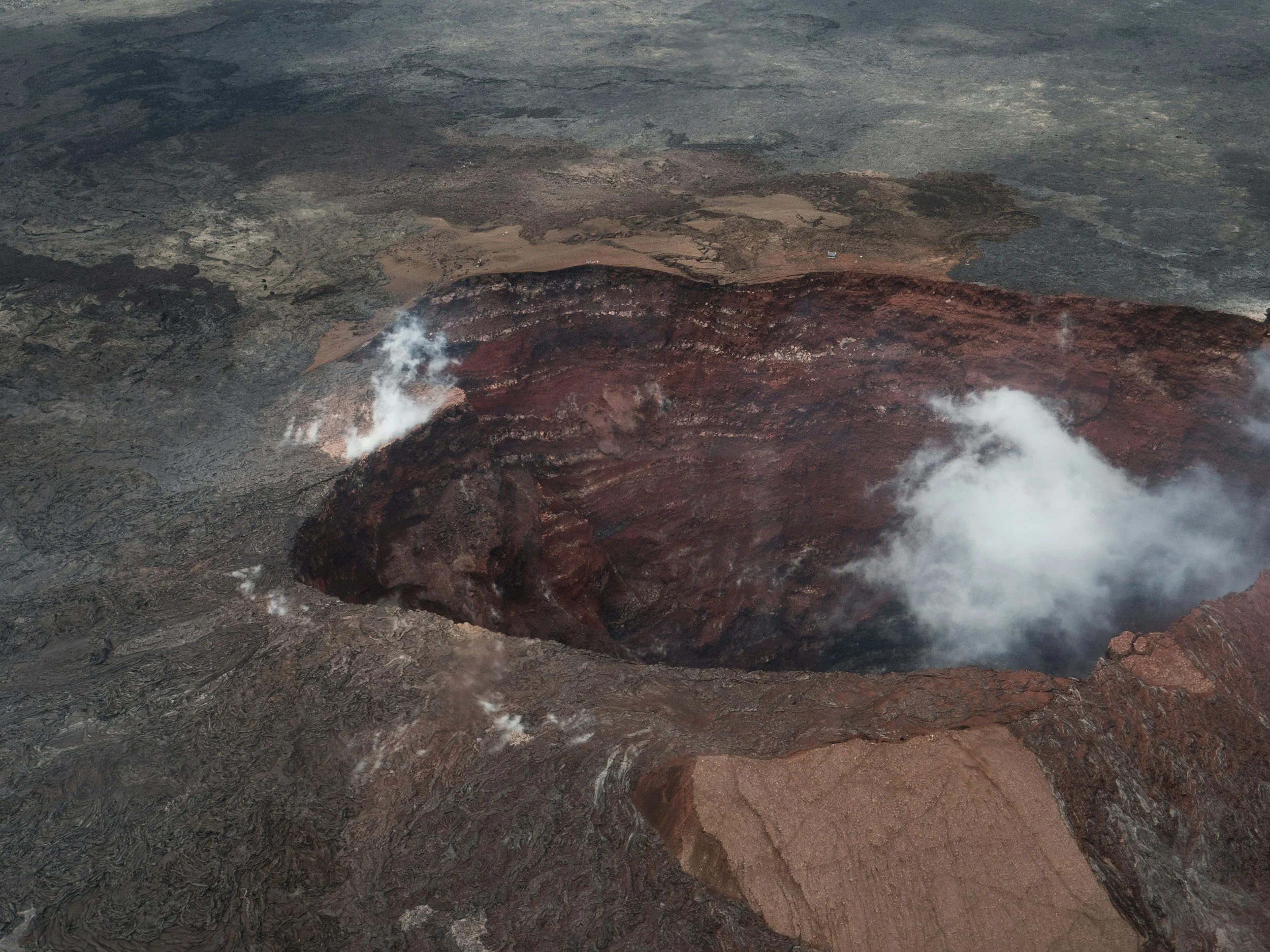
I just got back from a vacation in Hawaii where I got to go see Volcanoes National Park, the site of the actively erupting Kilauea shield volcano and one of the most unique landscapes you can find on earth. While I was there, I picked up my America the Beautiful Pass, an annual pass that provides unlimited entrances to all of the areas managed by the national park service that require fees to enter.

This is a great example of the government stepping in to try to prevent a tragedy of the commons, but I wanted to talk about a different angle about what this entrance fee might tell us. Particularly, how much value do people get out of national parks?
Why do we need to know willingness to pay?
In cost-benefit analysis, “willingness to pay” is the essential piece of information that allows us to compare wildly different impacts in a single coherent way. It is what allows us to say things like “X reduction in the crime rate is equivalent to Y energy savings annually.” A cost-benefit analysis is not complete without the monetization step, and when we are measuring something that doesn’t have a price because it isn’t traded in some market then we need some estimate for what that price would be if a market existed.
So, in the example of the national park, is it fair to say that my willingness to pay was $80? One flaw right away is that I purchased an annual pass, and since purchasing it I’ve used it three times already. Does that mean my willingness to pay is $80 divided by the number of visits I make in a year?
Clearly the entrance fee is not a good estimate for willingness to pay. We might be clued into that realization from the fact that these entrance fees aren’t market prices, they are a policy intervention to limit overuse. Again, natural resources are often common goods and can’t easily be traded in a fair market. One approach that economists use is the travel cost method, looking at the cumulative travel costs that go into a trip to determine the total willingness to pay.
Using travel costs to estimate willingness to pay
I’ve written before more generally about how economists go about calculating willingness to pay, and using travel costs certainly falls under the umbrella of a revealed preferences approach. The basic idea is this: when a natural area has a primary function of outdoor recreation,* then how far people are willing to travel gives us some idea of how valuable that particular area might be to the people who visit it.
For example, imagine that your neighborhood has two parks. One you can quickly walk to that doesn’t have many amenities, and another that you’d have to drive to but has newer facilities. If you consistently choose to drive to the second park, you are revealing something about your preferences. The extra time, gas, and effort involved in getting there are costs that you are voluntarily choosing to incur because you believe the experience is worth it.
The logical conclusion is that because you are willing to spend more to travel to the nicer park, those amenities must be more valuable than the additional costs. Collecting this information from multiple sources over a wide range of costs and amenities can give us enough to calculate willingness to pay.
The travel cost method is one way economists can get better estimates for how much people value all sorts of things. It’s mainly used to help value ecosystem services, but there might be other scenarios where this method might be helpful.
* The literature surrounding the value of ecosystem services is broad and reaches far beyond the direct willingness to pay people have for recreation opportunities. A full deep-dive into all the ways natural areas provide value to humans is beyond the scope of this blog.