Today, Scioto Analysis released a new cost-benefit analysis of New York City’s Congestion Relief Zone during its first full year of operation.
The analysis estimates that the program produced approximately $3.3 billion in social benefits and $1.3 billion in social costs in 2025. This amounts to approximately $2 billion in net benefits, with the program generating $2.60 in benefits for every $1 in costs.
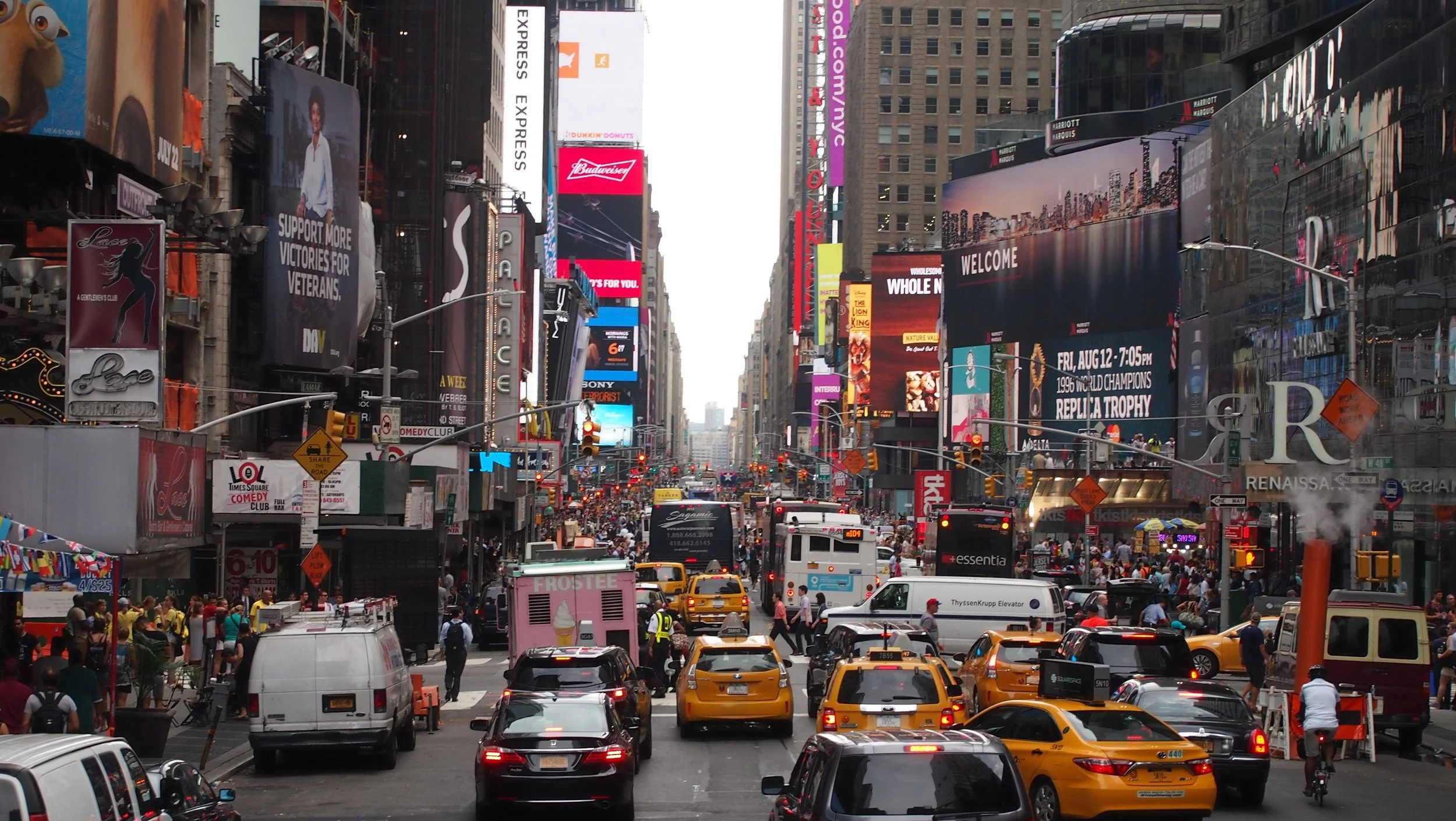
New York City implemented the Congestion Relief Zone in January 2025, becoming the first city in the United States to charge most vehicles entering its central business district. During its first year, traffic entering the zone declined by 11%, or approximately 73,000 vehicles per day.
To evaluate whether the program benefited New York City overall, analysts estimate impacts on mobility, road safety, environment and health, public expenditures, and businesses.
Reduced air pollution produced the largest estimated benefit. Lower particulate matter 2.5 exposure inside the zone generated approximately $810 million in health benefits, while reduced carbon dioxide emissions produced an additional $9.4 million.
Drivers experienced substantial time savings both inside and outside the zone. Drivers traveling within the zone received an estimated $560 million in time savings benefits, while drivers using nearby roads outside the zone received approximately $740 million.
Reduced traffic congestion also saved drivers approximately 3.3 million gallons of fuel, producing $10 million in benefits. Faster bus travel produced an additional $7.6 million in benefits for riders.
The analysis’ primary estimate finds that changes in crash patterns inside the zone produced approximately $250 million in safety benefits. However, alternative methods find that crashes may have instead imposed between $20 million and $100 million in costs, making roadway safety one of the analysis’ largest sources of uncertainty.
The largest cost was establishing and operating the tolling system, estimated at approximately $410 million. Other costs included discouraged vehicle trips, increased crashes in nearby spillover areas, environmental mitigation spending, and a potential increase in particulate matter 2.5 exposure in the South Bronx, which may be offset in future years by the benefits produced by environmental mitigation spending.
The analysis also tests how its findings change under alternative assumptions. A simulation of 10,000 possible outcomes produced a median net benefit of approximately $1.6 billion, with 90% of outcomes falling between approximately $1 billion and $2.1 billion in net benefits. Benefits exceeded costs in every simulation.
Though the Congestion Relief Zone produced a positive net benefit overall, its benefits are not experienced equally across the population. Drivers who continued entering the zone benefited from faster travel but paid the zone fee, while drivers who stopped making trips into the zone lost access to travel they valued. Residents inside the zone may have benefited from cleaner air, while nearby communities may have experienced increased crashes or pollution. The positive overall result therefore does not mean that every person or neighborhood was made better off by the policy.
The full report can be accessed here.