
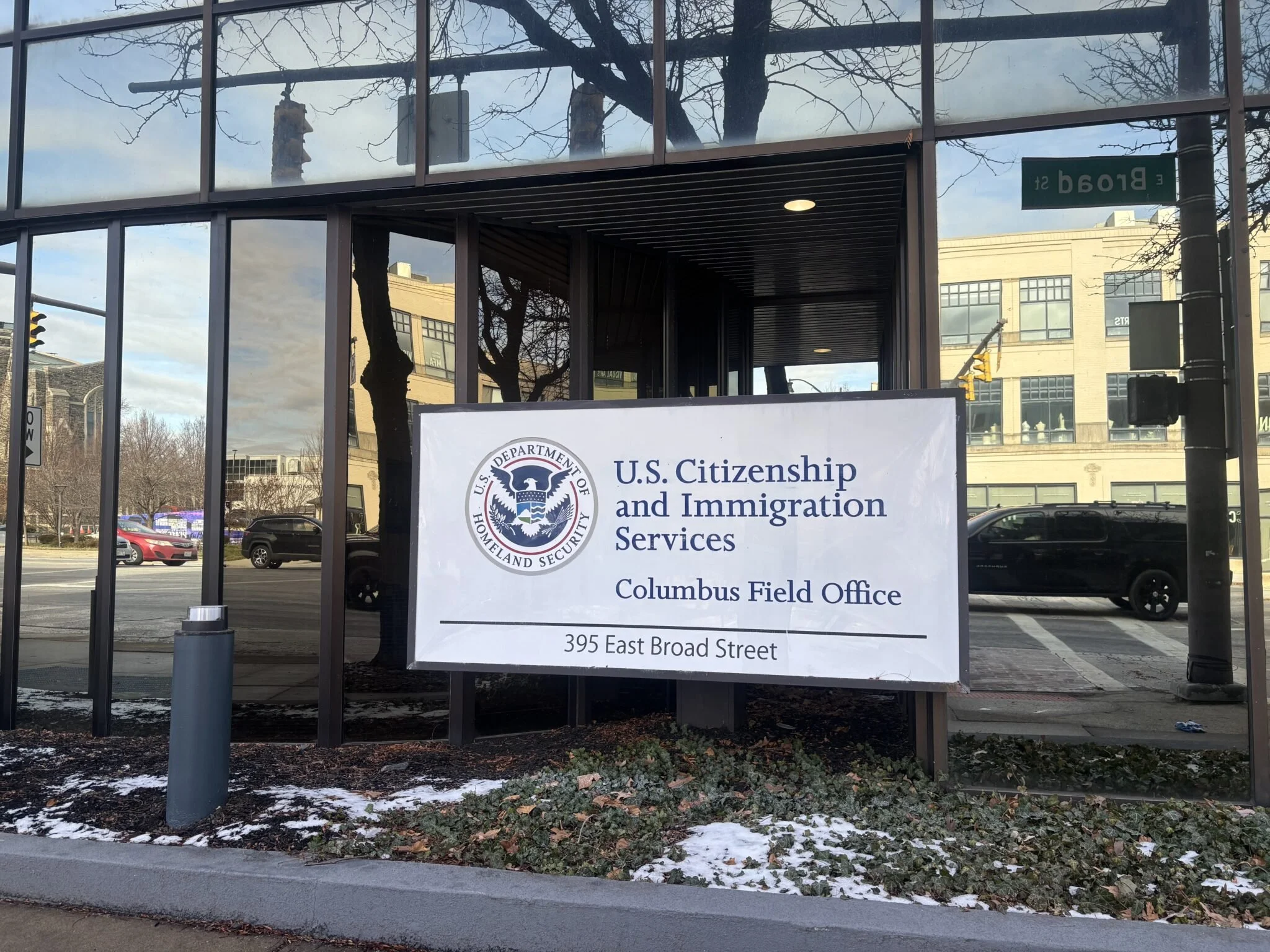
This month, Ohio landed in international news. The Guardian reported on ICE’s new “Operation Buckeye,” an initiative to deport Somali residents of central Ohio and throughout the state.

While deportations represent the most visible and sometimes violent policy being enacted in the United States today, the largest impacts on immigration in today are coming from limiting immigration.
According to researchers at the Brookings Institution and the American Enterprise Institute, 100,000 more people left the United States in 2025 than in 2024. But nearly 2 million fewer people immigrated into the United States in 2025 compared to the previous year.
When all is said and done, reductions in immigration were 19 times as high as total increase in emigration.
This means that the United States had a historically low net immigration rate, with about as many people leaving the Land of Opportunity in 2025 as came in.
I have written in the past about how slowing immigration will impact Ohio in the future.
I also asked a question to Scioto Analysis’s Ohio Economic Experts Panel about how the state’s immigration slowdown will impact the economy.
Most economists said it would lead to higher prices, nearly all said it would lead to less small business formation, and all of them said it would lower tax revenue.
A conversation I had on social media recently about an article written on that experts panel led me to an interesting question: has this happened before?
Douglas Buchanan of the Columbus Metropolitan Club asked me if there was economic fallout from U.S. restrictions on immigration enacted in 1924.
The Immigration Act of 1924 is considered by many to be the among most restrictionist immigration law passed in U.S. history, often mentioned alongside the Chinese Exclusion Act of 1882.
Responding to public fears about demographic change, Congressman and Eugenics Advocate Albert Johnson championed legislation that enacted quotas on immigration in an attempt to keep the country’s “white” population at the level established by the 1920 census.
The economic literature shows a range of economic effects from this legislation, mostly negative.
Danish economists studying the change found the immigration crackdown led to long-term population declines for areas in the U.S. that previously relied on immigration.
They also found manufacturing productivity dropped due to less availability of labor and that native worker job quality dropped, presumably due to fewer people buying goods due to fewer immigrants coming into the country to buy goods.
An international team of researchers looked at how farms responded to the reduction, finding they moved from labor-intensive agricultural techniques to more reliance on technology.
In short, restricting immigration led to more jobs…for tractors.
According to one Chinese researcher, the 1924 crackdown did have one interesting side effect: spurring the Great Migration.
With many employers in large northern cities looking for workers, they turned to Black migrants from the South, which led to new opportunities for Black American workers.
On balance, restricting immigration leads to fewer consumers, fewer workers, fewer entrepreneurs, fewer inventions, fewer ideas, fewer skills, and less of an edge for Ohio’s economy.
As the state and local governments are trying to figure out how much to support or oppose federal efforts to deport and restrict immigration, they cannot ignore that the damage they do to the lives of immigrants will spill into the lives of American-born residents as well.
This commentary first appeared in the Ohio Capital Journal.