Last year, Congress rushed to push through all of the president’s wish list as H.R. 1, the “Big Beautiful Bill Act,” while the new president’s honeymoon poll numbers were still intact.
The bill enacted a range of policies, including making President Trump’s 2017 tax cuts permanent, exempting tips and overtime from federal income taxes, and requiring new work requirements for safety net features like Medicaid.
One item that flew under the radar for many but has been reported by the Cleveland-based Center for Community Solutions since last year is a provision that changes the funding structure for the Supplemental Nutrition Assistance Program (SNAP, previously known as “food stamps”).
The new law enacted new requirements on states, requiring them to reduce benefit provision error rates or be required to pick up larger parts of the tab for SNAP.
The problem with this requirement is that Congress set the required error rate so low that only seven states would have achieved it in 2024.
According to the Center for Community Solutions, Ohio’s error rate was 9% in 2024 and if Ohio’s rate is that high in 2026, the state will be on the hook for $318 million in SNAP payments that it previously did not have to pay.
An estimate by the Georgetown Law Center on Poverty and Inequality in September put that number at closer to $390 million.
It seems like whomever you ask, Ohio will be on the hook for hundreds of millions of dollars if it wants to keep its SNAP program.
To understand the scale of this, a $318 million new SNAP obligation would make Ohio’s new SNAP obligation on its own as expensive as a top-10 agency in the state government.
That would make continuing to fund SNAP as expensive as Ohio’s entire Department of Natural Resources, Department of Health, and Department of Transportation combined according to Legislative Service Commission data.
$300 million or more is no tiny line item, even for a large state like Ohio.
Ohio has previously balked at proposals for $300 million food programs, so there is a strong scenario that Ohio ends up with a $300 million tab from the federal government later this year and state legislators balk at it, leading to the end of the SNAP program in Ohio.
SNAP is a big deal.
It is one of the largest antipoverty programs in the country, pulling an estimated 3.6 million Americans out of poverty.
In our 2024 study of poverty in Ohio, we estimated that over 1.5% of the state population is kept out of poverty by SNAP. That means that under a conservative scenario, 180,000 Ohio residents would be plunged into poverty by dropping the program.
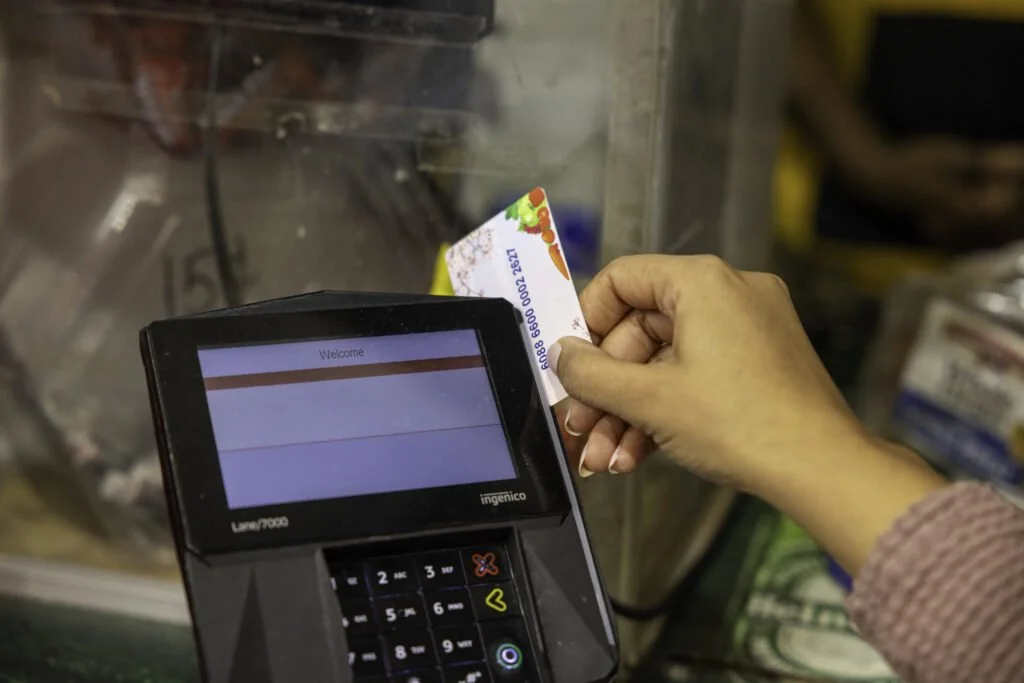
SNAP is a program that reduces poverty, reduces food insecurity, and supports local grocers.
Losing the $260 million a month that the federal government finances in grocery spending in Ohio through SNAP will mean the closing of grocery stores that serve low-income households across the state, especially considering the low margins grocery stores run on.
This could be especially devastating for low-income, rural communities like Vinton County, Ohio, which endured a stint a decade ago where it had no grocery store throughout the entire county.
Ohio is on the precipice of facing the consequences of H.R. 1.
Hopefully federal policymakers realize the dangers of playing chicken with the U.S. safety net and decide to pump the brakes, otherwise hundreds of thousands of low-income residents in Ohio will suffer.
This commentary first appeared in the Ohio Capital Journal.