
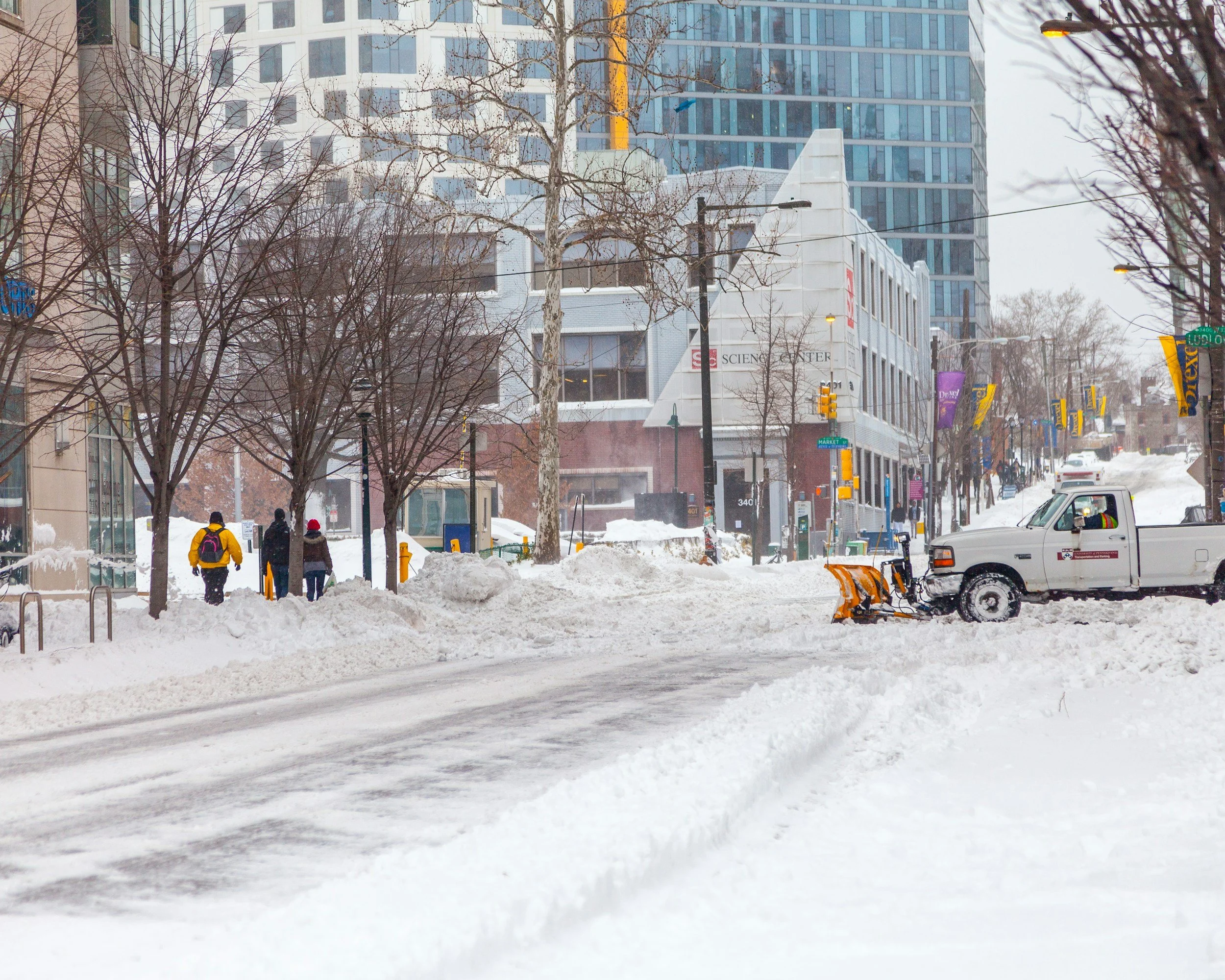
As a Minnesotan, I love the winter. To enjoy living in a place that can be this inhospitable, you have to find ways to enjoy being outside when it's cold. For me, that usually means being on the ice, whether it's skating or playing broomball.

One thing I don’t like about Minnesota is how much snow impacts my experience on the roads.
The city of Saint Paul has notoriously bad plowing, particularly on smaller side streets in residential neighborhoods. Growing up here, I can’t remember a winter where the street outside my parents’ home was ever visible in the middle of winter. From the time the first major snowstorm hit until the snowmelt during the spring, that street had an impenetrable layer of snow. Saint Paul residents get especially worked up about this issue because our neighbors in Minneapolis seem to have figured out how to effectively plow their streets.
As we begin another winter of poorly plowed roads, the question came across my mind: how much is it worth to have well plowed roads?
I understand that for the city of Saint Paul to improve their road plowing system there would be costs. But do we know whether or not it would be worth it?
I did a little bit of cursory research, and I came across this report from 2014 about the lost economic activity that results from a snowstorm. In one of their key takeaways from their executive summary, the authors note “The economic impact of snow-related closures far exceeds the cost of timely snow removal. Although states and localities may be hesitant to expend significant upfront resources in the short-term, the long-term payoff more than justifies the expense.”
For Minnesota, the authors estimate that a major snowstorm would cost the state over $167 million (~ $232 adjusting for inflation) in lost economic activity. This report is looking at situations where conditions are so bad that stores aren’t open, which clearly have negative economic consequences. To Saint Paul’s credit, when major snow storms happen they do a good job of getting major roads open quickly. Businesses rarely have to stay closed as a result.
Unfortunately, this report doesn’t really cover the costs associated with bad plowing of smaller streets. How much economic activity is lost because people don’t want to leave their houses when it’s annoying to go a few blocks on poorly plowed roads to get to the main streets? How much longer are people’s commutes every day?
Let’s do some back of the envelope math:
Say a person commutes every weekday. There are 13 weeks between the start of December this year and the last week of February which adds up to 65 commutes. If the poor road conditions add five minutes each direction, that adds up to over 10 additional hours of commuting over the main winter months. Maybe it’s unrealistic to think that better plowing could save that much time per commuter, but it still adds up quickly.
I would love to see a more detailed analysis of how city plowing policies impact the economy. Maybe it would be possible using something like the American Time Use Survey if there was some sort of natural experiment where a city changed their plowing methods. Plowing is an important public service, and it would be good to know exactly how much value it provides.