
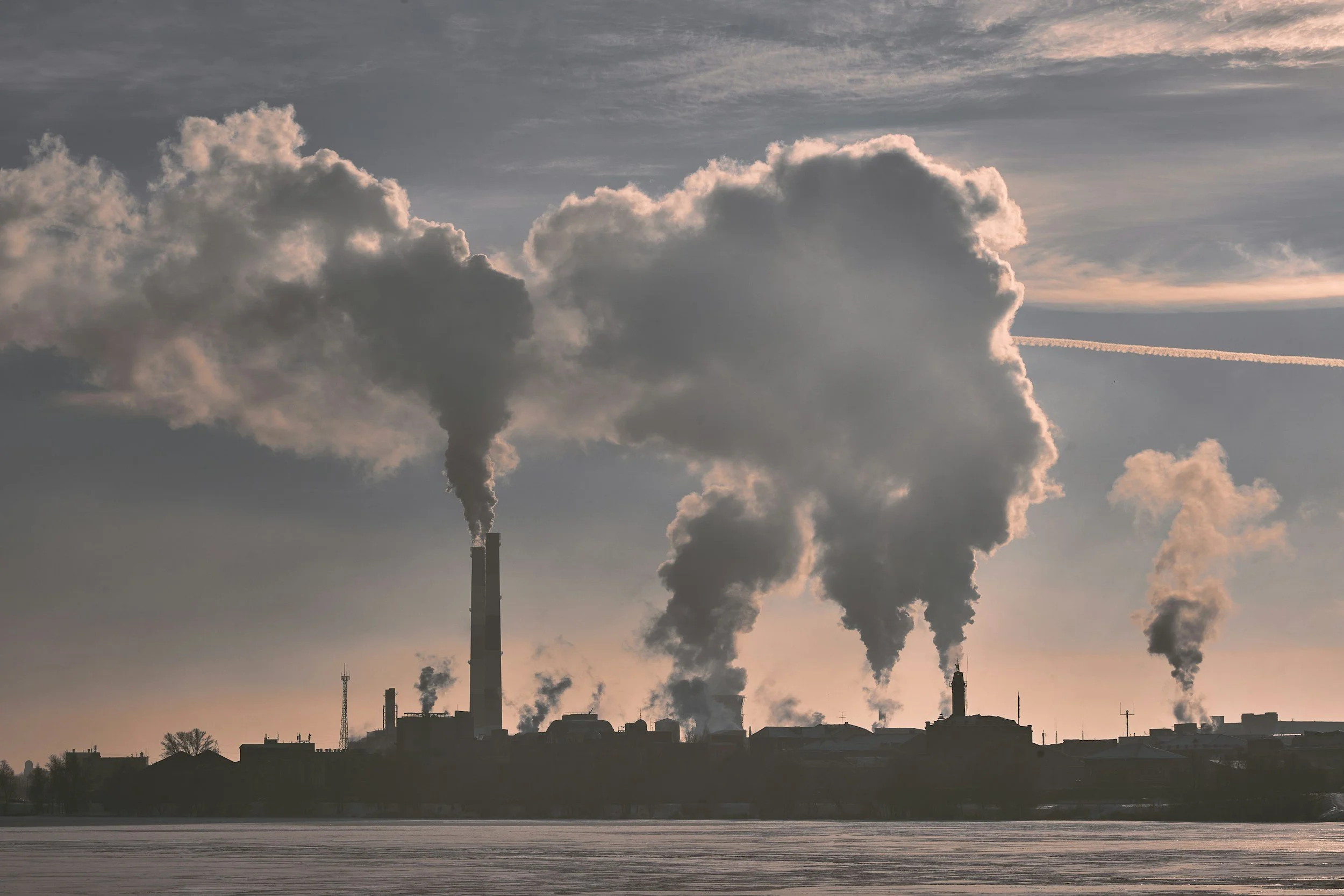
In environmental policy, reducing carbon emissions generally means putting a price on pollution or limiting the amount of pollution that can occur. Two of the most common approaches are carbon taxes and cap-and-trade. While both use market-based mechanisms to reduce emissions, they create different incentives and have different tradeoffs for policymakers and businesses.

Carbon Tax
A carbon tax works by setting a price on carbon emissions, and allowing firms to emit as much carbon as they can afford. This functions as a Pigouvian tax which if set would lead to an efficient decrease in carbon emissions.
In order to effectively set a carbon tax, policymakers need to understand what the social cost of carbon is, in other words what the global externality of carbon emissions costs. If policymakers arrive at a solid estimate for this number, then economic theory tells us that markets with any amount of carbon emissions should respond accordingly and shift their production/consumption to a socially optimal level.
Cap-and-trade
Sometimes branded as “cap-and-invest,” this policy works by setting a limit on the total amount of carbon emissions that occur in a given jurisdiction, then setting up a market that enables firms to buy and sell the legal ability to emit carbon. For example, every factory in a state might be given a certain allotment of carbon credits that determine how much total carbon they are allowed to emit. Factories that emit more than that will have to buy credits from factories that emit less than their allotment, acting as a de facto subsidy for firms that reduce emissions.
This provides a market framework that essentially allows firms to determine among themselves where the most cost-effective emission reduction opportunities are. Because firms can buy and sell these carbon allowances, firms that have opportunities to reduce their emissions can finance these changes by selling their allowances to firms that can’t change as easily.
Which is better: carbon taxes or cap-and-trade?
In terms of reducing emissions, both can be effective if implemented correctly. The tradeoffs are more about what signals firms are receiving and how the policies react to sudden changes in economic conditions.
A carbon tax offers price certainty to firms. This means that they can more easily plan their response to the policy, and it is clear based on the price of carbon whether or not some pollution reducing investment would be worthwhile financially.
The main drawback of a carbon tax is that a sudden change in economic conditions might make the policy less effective at reducing emissions. An economic boom in a heavily polluting industry might lead to producers absorbing the carbon tax and polluting through it, or burdensome regulations on carbon-free electricity sources might make fossil fuels relatively more competitive.
In contrast, the cap-and-trade framework does away with price certainty and instead limits overall emissions in a given region. There can be more price volatility for firms, but there is more certainty surrounding total emissions.
Cap-and-trade can also adjust more naturally to changes in the cost of reducing emissions. If reducing emissions becomes unexpectedly cheap, firms have an incentive to reduce more pollution and sell their excess allowances. If emissions reductions become more expensive, firms can instead purchase allowances from other firms, preventing the overall cost of meeting the emissions target from becoming unnecessarily high.
Ultimately, there is no single policy that is always better. Both carbon taxes and cap-and-trade can be effective tools for reducing emissions. As long as both are designed properly, policymakers can focus on which areas of certainty/uncertainty they feel more comfortable with.