
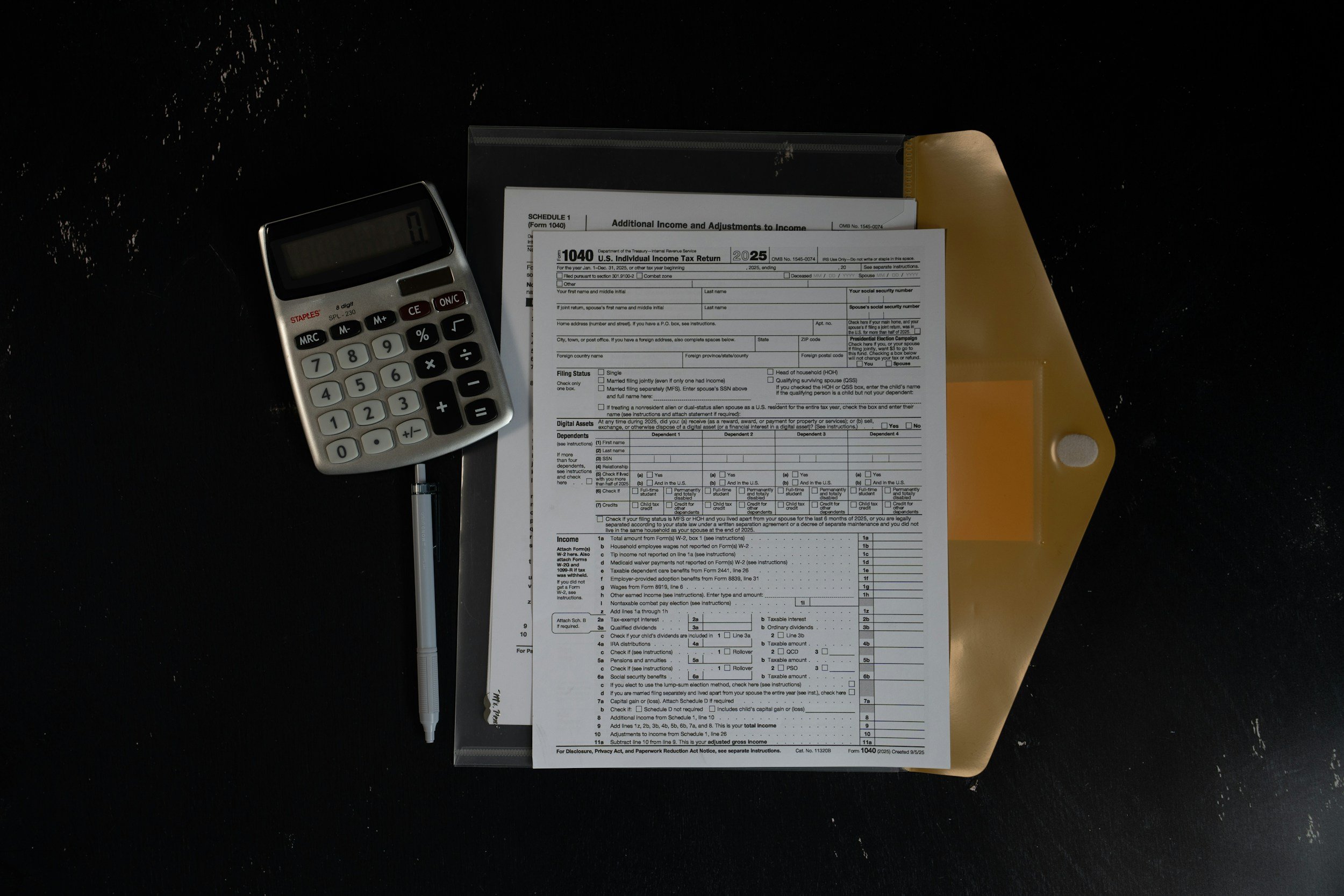
Recently, we released a study on inequality in Ohio and some of the policy options that impact it. One topic was the Negative Income Tax, an idea first proposed by Milton Friedman as an alternative to the in-kind transfers we typically associate with the social safety net.

How does a negative income tax work?
To understand how a negative income tax works, it is helpful to first consider how a regular income tax works. Above a certain threshold, the government collects a percentage of your income. If the tax rate was 10% for income above $10,000, then someone making $20,000 has to pay $1,000 in taxes. Negative income taxes work in reverse. Instead of paying a percentage of your income above a threshold, someone receives a match for the percentage of their income that falls below some threshold.
For example, let's say that below $10,000 there is a negative tax rate of 50%. Someone with no income at all would receive $5,000 from the government, and someone earning $5,000 would receive $2,500. Once a person’s income rises above the threshold, the subsidy disappears and the ordinary tax system takes over.
One of the main goals of a negative income tax is to create a smoother transition between receiving assistance and earning additional income. Many traditional welfare systems phase out benefits abruptly as income rises, which can create situations where earning an extra dollar leaves someone little better off or even worse off overall. This phenomenon is called the benefits cliff, and it is a major policy issue. Because the negative income tax phases out gradually, individuals continue to gain financially from working more and earning higher wages.
Why do economists like negative income taxes?
One of the most clear benefits of the negative income tax is its simplicity. Rather than operating dozens of separate programs with different eligibility rules, benefit formulas, and administrative requirements, a negative income tax consolidates assistance into a single cash transfer system tied directly to income. It would take little additional work from the IRS, and everyone who files their taxes would automatically be enrolled.
Supporters also argue that cash transfers give households more flexibility than in-kind benefits. Instead of policymakers deciding exactly how assistance must be used, recipients can allocate resources according to their own needs. One household may prioritize rent, another childcare or transportation costs. Economists generally believe people managing resources at the household often have better information about their own needs than centralized benefit administrators or legislators do.
Costs of a negative income tax
Like any large transfer program, a negative income tax could be expensive. The total cost depends on how generous the benefits are, where the income threshold is set, and how quickly payments phase out as earnings rise. The good thing is that policymakers could easily control how much this costs since they have historic tax data to look at, but it is likely that this would be a big line item in any public budget.
One option to finance a negative income tax would be higher taxes elsewhere. That could mean raising income taxes, consumption taxes, or corporate taxes depending on how policymakers chose to structure the system. While this would allow the program to exist alongside much of the current safety net, higher taxes also create their own economic costs.
Another option would be replacing existing welfare programs with a negative income tax. This was closer to Milton Friedman’s original vision. Instead of operating many separate assistance programs, the government could consolidate portions of the social safety net into one direct cash transfer system. This could potentially reduce administrative complexity and give recipients more flexibility in how they spend assistance.
However, replacing existing programs also creates tradeoffs. Some households may benefit more from direct cash transfers, while others may rely heavily on targeted programs like housing assistance, Medicaid, or food assistance. A single cash-based system may be simpler, but it may also provide less support for people with unusually high medical expenses, disabilities, or other specialized needs.
Ultimately, a negative income tax is another option policymakers have for reducing inequality. Like most economic policy questions, there is no solution without costs. Policymakers must decide which tradeoffs they are most willing to accept and which goals they want the system to prioritize.