
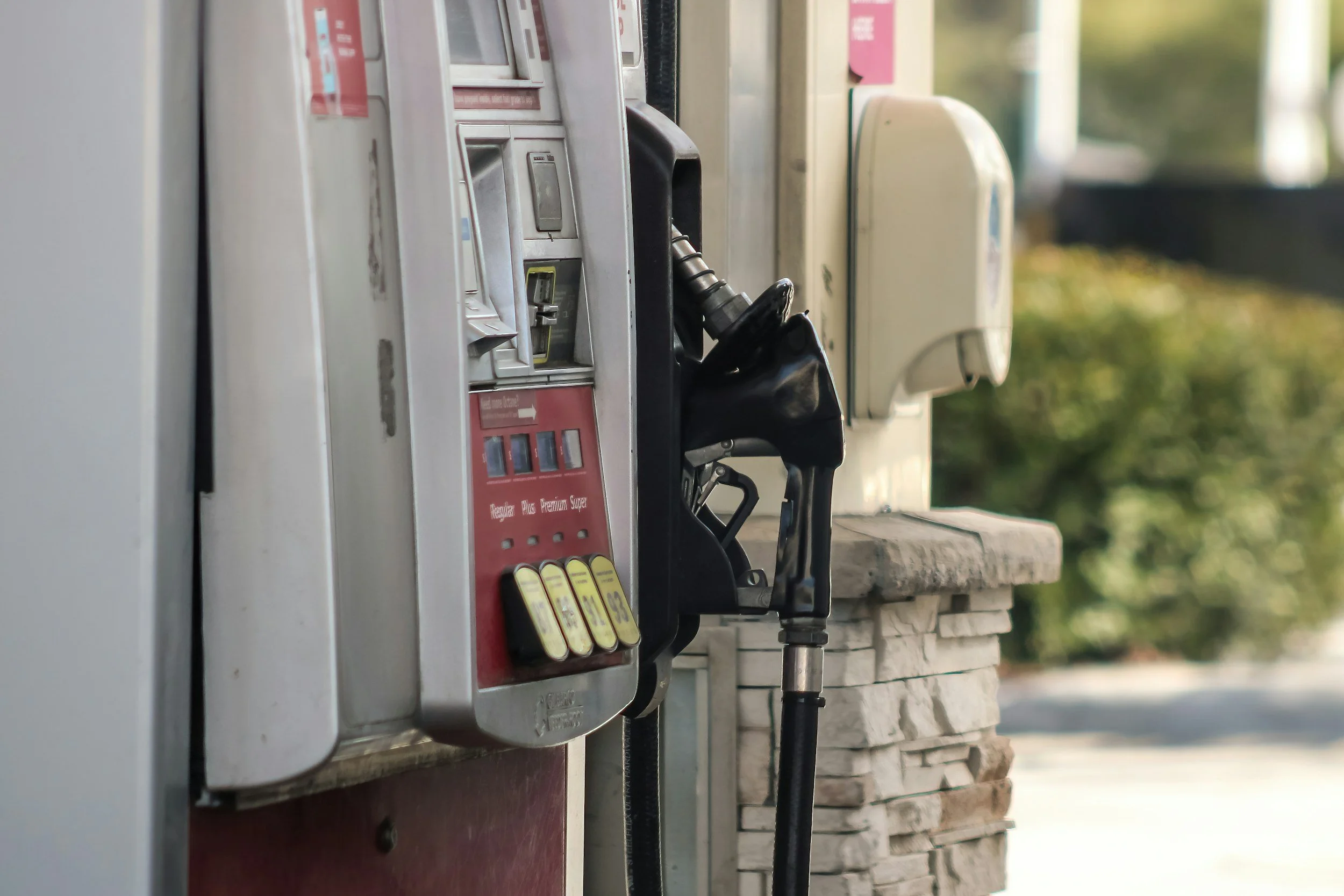
If you’ve had to fill a car with gas recently or have been following the news at all over the past two months, you’ve certainly noticed how high the cost of gasoline has risen recently. The war in Iran has had a dramatic impact on the global supply of oil, and policymakers at the federal and state level are responding to this challenge with a sweeping proposal: suspend gas taxes as a way to provide consumers with short-term relief.

Tax burden vs. tax amount
One factor to consider is how much suspending the gas tax would actually lower costs for consumers. A common assumption is that if the federal government suspends the 18.4 cent gas tax, consumers will automatically see prices fall by 18.4 cents per gallon. In reality, that isn’t how taxes work.
Economists distinguish between the legal burden of a tax and the economic burden of a tax. Just because one party has to actually pay the tax to the government does not mean that they are entirely responsible for the total cost of the tax. If a producer has to be the one to write the check, they can pass on a portion of tax amount to consumers in the form of higher prices. In general, they can't pass on the entire amount of the tax and the market will reach a new equilibrium price with both sides paying some percentage. In practice, that means that and 18-cent lower gas tax will lead to less than an 18-cent decrease in gas prices at the pump
Loss of gas tax revenue
Another issue with suspension of gas taxes is the loss of public revenue. Gas taxes are not just arbitrary charges added onto fuel purchases. In many cases, they are specifically designed as a user fee to fund transportation infrastructure such as highways, bridges, and road maintenance.
At the federal level, gas tax revenues flow primarily into the Highway Trust Fund. State governments often use their own gas taxes to support local transportation projects as well. Suspending these taxes, even temporarily, can create major budget shortfalls.
Those shortfalls do not simply disappear. Governments generally have three choices when revenue declines: reduce spending, raise taxes elsewhere, or borrow money. None of those options are free. Delaying road maintenance today can create much larger repair costs in the future, while shifting the tax burden elsewhere may simply redistribute the pain rather than eliminate it.
There is also a timing issue here. Infrastructure projects are often planned years in advance. Sudden revenue disruptions can make long-term transportation planning significantly more difficult for state and local governments.
Gas taxes curb externalities of gas consumption
Gasoline consumption also creates several negative externalities that gas taxes help reduce. An externality occurs when a market transaction imposes costs on people who are not directly involved in that transaction. In the case of gasoline, those costs include pollution, greenhouse gas emissions, traffic congestion, and road wear.
The gas tax helps correct this market failure by taking the external costs of consumption and adding them into the internal market price. Even though the war in Iran is an exogenous shock that has spiked the price, that shock only impacts the internal price. In order to avoid a market failure, policymakers still need to account for these externalities with a tax if they want to promote an efficient market in transportation fuels.
Why this might be a good policy
One thing that makes gas prices a strange policy tool is that individual elasticities for gasoline can be very different from person to person. I happen to live in a neighborhood where I have pretty easy walking access to a lot of my essentials. Add on top of that the fact that I work remotely and I only really ever have to get in a car if I want to go somewhere for fun. As gas prices have gone up and the weather has gotten nicer, I’ve been able to fairly easily substitute away from gas consumption to other forms of transportation.
Compare that to someone who needs to drive long distances for their work. Those people might have a nearly perfect inelastic demand for gas. These people are disproportionately impacted by higher gas prices, and they might need some targeted relief from the public sector to get through this difficult time.
At the end of the day, suspending the gas tax is a tool that trades off future wellbeing for current wellbeing. The revenues created by the gas tax are an important funding stream for road infrastructure both the federal and state governments. Perhaps there could be some policy like a cash transfer that targets people who have to drive for work, funded via some broader base tax. This type of policy could still offer short-term support, without distorting a specific market in the same way, but whether that additional complexity is worth it is for a policymaker to decide.