
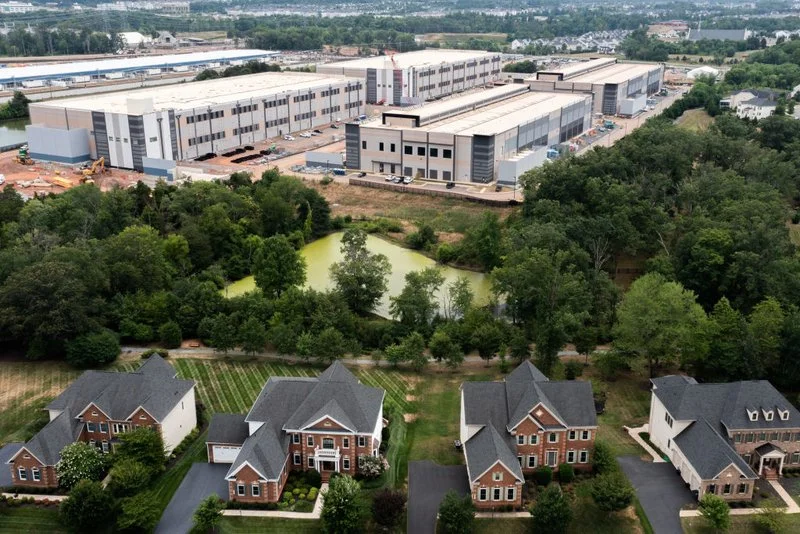
In the battle over data center siting in Ohio, one of the flashpoints is how data centers impact electricity prices.

Data centers are indeed energy-intensive and the worry about their impact on local energy prices has moved most developers to work to get their energy generated in behind-the-meter projects that don’t draw from the electrical grid.
So if you are a data center developer, what kind of power are you going to put behind the meter?
Looking at the top sources of power in the United States, you can whittle the options down pretty quickly.
Coal, once the heavyweight for energy in the United States, has seen its economics turn against itself and the United States has only begun construction on one coal-fired power plant in the past 13 years.
For all the talk of small modular reactors, nuclear power is still not viable in Ohio due to the massive up-front costs and decades of regulatory hurdles to clear.
Hydropower and geothermal power demand specific topographic conditions, and biomass has economies of scale that don’t make it competitive with other technologies.
This leaves developers with three choices: solar, wind, and natural gas.
The state has put its thumb on the scale when it comes to choosing between these technologies. A range of state decisions have made siting solar, wind, and natural gas projects very different from one another.
Solar and natural gas projects over 50 megawatts must be approved by the Ohio Power Siting Board. For reference, this would be large enough to power all the homes in Canton with a little bit of energy left over.
Wind projects, on the other hand, only need to be 5 megawatts to face Ohio Power Siting Board scrutiny. That is only enough to power about half the homes in Athens.
The state has also given considerable latitude to county governments to ban solar and wind projects in unincorporated areas, a barrier gas-powered plants do not have to overcome.
For projects that are not outright banned, two local representatives get a vote on Siting Board decisions for wind and solar projects, a requirement not faced by natural gas projects.
Solar and wind projects also face a regime of siting rules that do not apply to gas plants.
Solar facilities face specified setbacks, landscaping, fencing, stormwater, noise, and vegetation requirements. Wind facilities face turbine setbacks and shadow-flicker, ice-throw, blade-failure, communications-interference, noise, and aviation requirements.
Solar and wind projects also face decommissioning planning requirements that gas-powered plants are not subject to.
Gas-powered plants do have one requirement that solar and wind projects do not: they must submit a range of operational air-quality analyses. This makes sense to a certain extent given solar and wind generation is emissions-free.
In an ideal world, technologies can compete against each other on a level playing field.
If there are specific costs associated with outcomes like public health, environmental sustainability, or even aesthetics, these can be captured through fees and taxes specifically designed to internalize these costs into the market.
Creating separate regulatory regimes for different technologies, on the other hand, makes legislators the arbiters of technological superiority rather than the market.
This commentary first appeared in the Ohio Capital Journal.